
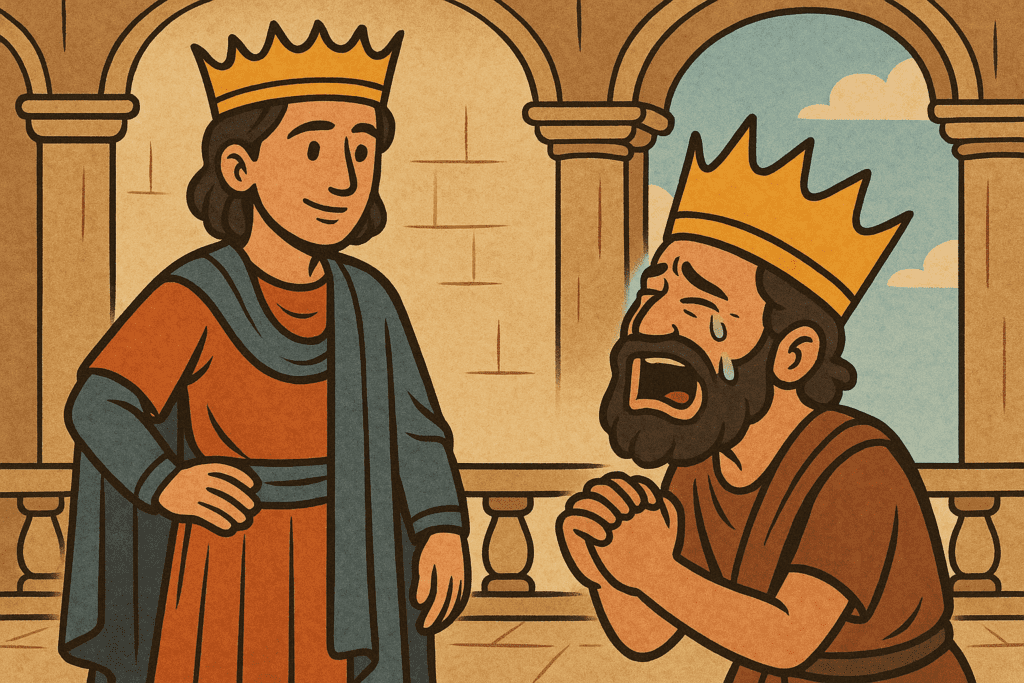
Yehuda and Tamar: How a Disastrous Story Plants the Seeds of Moshiach
Parshat Vayeshev introduces one of the most surprising and redemptive stories in the Torah: Yehuda and Tamar. On the surface, it looks like a family disaster—failed marriages, moral confusion, public shame. Yet from this brokenness emerges the royal line of David and ultimately Moshiach.
Before entering the story, we need to ask a deeper question.
Why Yehuda and not Yosef?
Yaakov openly loves Yosef more than his brothers. The commentators explain that Yosef resembled Yaakov in character or absorbed his Torah more deeply. And the Torah itself places Yosef at center stage for four parshiot.
He is the dreamer whose father “kept the matter in mind,”
the tzaddik who resists Potiphar’s wife,
the visionary who becomes viceroy,
the strategist who engineers his brothers’ teshuvah,
and ultimately the savior of the family during famine.
Yosef is heroic, brilliant, spiritually luminous.
Yet Yosef is not chosen as the father of Moshiach.
Even Moshiach ben Yosef—mentioned in the Talmud—is only a precursor who dies in the process of preparing the way. The eternal messianic line, the final redemption, must come from Yehuda.
Why?
Yehuda seems far less perfect.
He participated in selling Yosef.
He failed to protect his sons.
He fell into the incident with Tamar.
Yosef is one of the seven Ushpizin—a spiritual patriarch. Yehuda feels more human, more fragile.
So what quality does Yehuda have that Yosef does not?
Tamar: The Hidden Righteousness Behind the Story
Chazal reveal that Tamar was a descendant of Shem, the son of Noach—a righteous woman who knew the destiny of Moshiach must emerge through this family. Despite the tragic failures of Yehuda’s sons, she remained committed to bringing that spiritual future into the world.
Look at the pattern:
• Er avoids pregnancy out of ta’avah—his own pleasure.
• Onan spills seed out of kinah—jealousy of his deceased brother.
• Shelah never marries Tamar because Yehuda hesitates, perhaps out of fear or shame and kavod .
And Yehuda himself is spiritually drifting—broken by the sale of Yosef, rejected by his family, emotionally depleted with depression-YEUSH.
Yet the turning point comes when Tamar reveals the items proving that Yehuda is the father of her child. She does not publicly shame him. She simply says: “Haker na—please recognize.”
And Yehuda becomes the first person in the Torah to publicly admit he was wrong:
“Tzadkah mimeni.”
“She is more righteous than I.”
This admission—this moment of responsibility and humility—is nothing less than the seed of Moshiach and his name “Yehuda “ means top be Mode which means admission
It is the first flowering of Yehuda’s true greatness.
Yehuda’s Arc: Falling and Rising
Yehuda’s transformation continues.
The brothers resent Yosef’s dreams because they sense a challenge to Yehuda’s kingship. Yehuda participates in the plan against Yosef, but then pivots and saves him from being killed.
Years later, when standing before the viceroy of Egypt (unaware that it is Yosef), Yehuda speaks with a maturity he did not have before. He takes full responsibility. He refuses to abandon Binyamin. He admits their guilt. He offers himself as a substitute.
Yehuda becomes the man who knows how to fall and how to rise again.
Yosef is a natural tzaddik. Yehuda becomes a baal teshuvah.
Why Kingship Requires Teshuvah
This is the heart of the matter.
A tzaddik like Yosef is inspiring but almost inaccessible. His righteousness is clean, unwavering, superhuman. But a king must be a soul the people can see themselves in—a human being who knows the terrain of failure and repair.
The Rabbis teach:
“In the place where baalei teshuvah stand, even the perfectly righteous cannot stand.”
A king must understand the struggles of his people. He must battle darkness with them and show how to return to the light. His strength does not come from perfection, but from resilience, honesty, and responsibility.
And this quality reaches its full expression in Yehuda’s descendant:
King David: The Greatest King Is the One Who Can Say the Words ‘I Was Wrong’
King David embodies Yehuda’s spiritual DNA.
If Yehuda is the first to say “I was wrong,” David becomes the master of that art.
Sefer Tehillim is not the diary of a flawless man; it is the emotional autobiography of a soul constantly returning to God. After the episode with Batsheva, David does the unimaginable for an ancient king—he admits guilt without hesitation. “Chatati la’Hashem.”
This is why David becomes Ne’im Zemirot Yisrael—the sweet singer of Israel. He transforms sin into yearning, failure into closeness, brokenness into prayer.
Our daily Tachanun echoes David’s language and posture: the courage to say, “I slipped, I am returning.” Jewish kingship is built on this vulnerability.
A king who cannot admit failure is dangerous.
A king who can admit failure becomes a shepherd of souls.
Moshiach must come from this lineage—not from perfection but from perfected teshuvah.